Home » Gadgets » Evaluating the Asus ProArt P16 and the Nvidia Spark RTX Chip
Evaluating the Asus ProArt P16 and the Nvidia Spark RTX Chip
✍️ By Brilliant Paul Babu, Editor • 🕒 November 23, 2026 DealsGadgets
The Asus ProArt P16 integrates the new Nvidia Spark RTX chip to deliver a unified machine for productivity, gaming, and local artificial intelligence workloads, though it commands a substantial price tag.
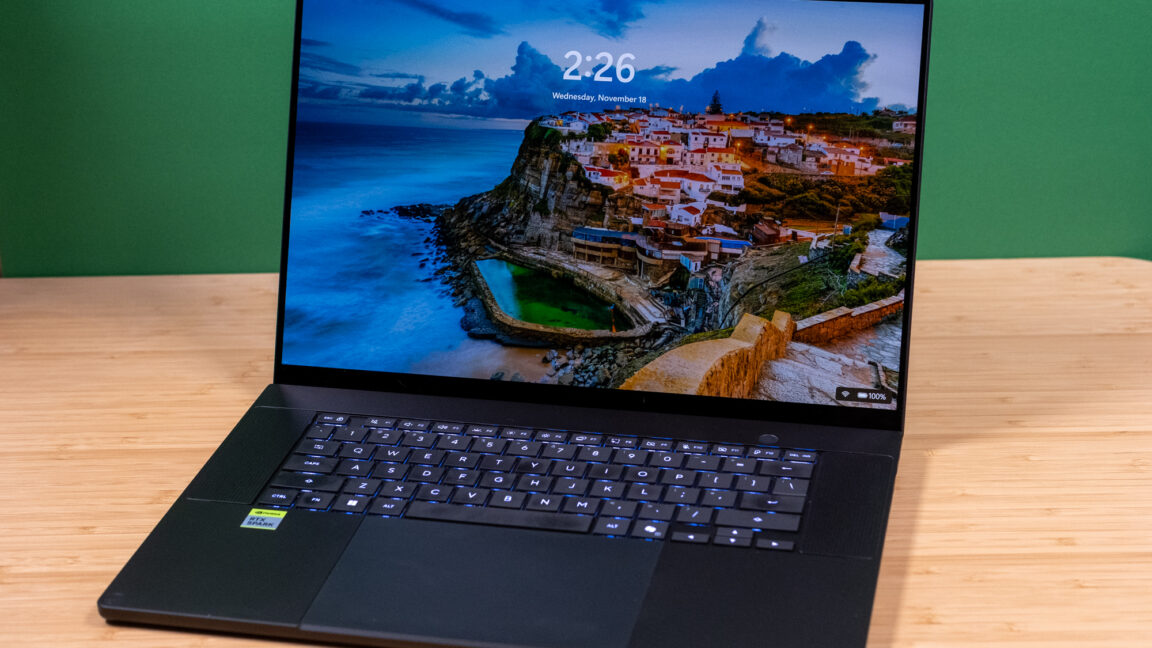
Image: Ars Technica
Under the Hood of the Asus ProArt P16
Hardware architecture on the top-tier configuration centers around the new Nvidia Spark RTX chip, specifically the Spark N1X model. This processor features a 20-core Grace CPU divided evenly between 10 high-performance Arm Cortex-X925 cores and 10 power-efficient Arm Cortex-A725 cores. Performance clusters achieve boost speeds between 4. 0 and 4. 1 GHz, while efficiency cores reach up to 2. 8 GHz. Processor memory caching totals 49MB, split between 24MB of shared L3 cache and 25MB of L2 cache. Graphics tasks and calculations rely on the Nvidia GB20B Blackwell GPU, which houses 6,144 cores across 48 streaming multiprocessors backed by its own 24MB L2 cache.
Memory Capabilities and Artificial Intelligence Performance
Local artificial intelligence execution on this hardware reaches up to 1,000 TOPS of FP4 AI compute alongside 31 TFLOPS of FP32 graphical performance. Fifth-generation Tensor Cores inside the machine support Nvidia technologies like DLSS, Reflex, ACE, G-Sync, CUDA, and NVFP4. Testing units run with 128GB of LPDDR5x RAM supporting up to 300GB/s of raw bandwidth. Because the machine operates on Windows 11, overhead limits available memory for intelligence tasks slightly, capping the allocation at about 110GB out of the total shared pool. This capacity allows users to load models exceeding 100 billion parameters locally without sending data to external cloud servers.
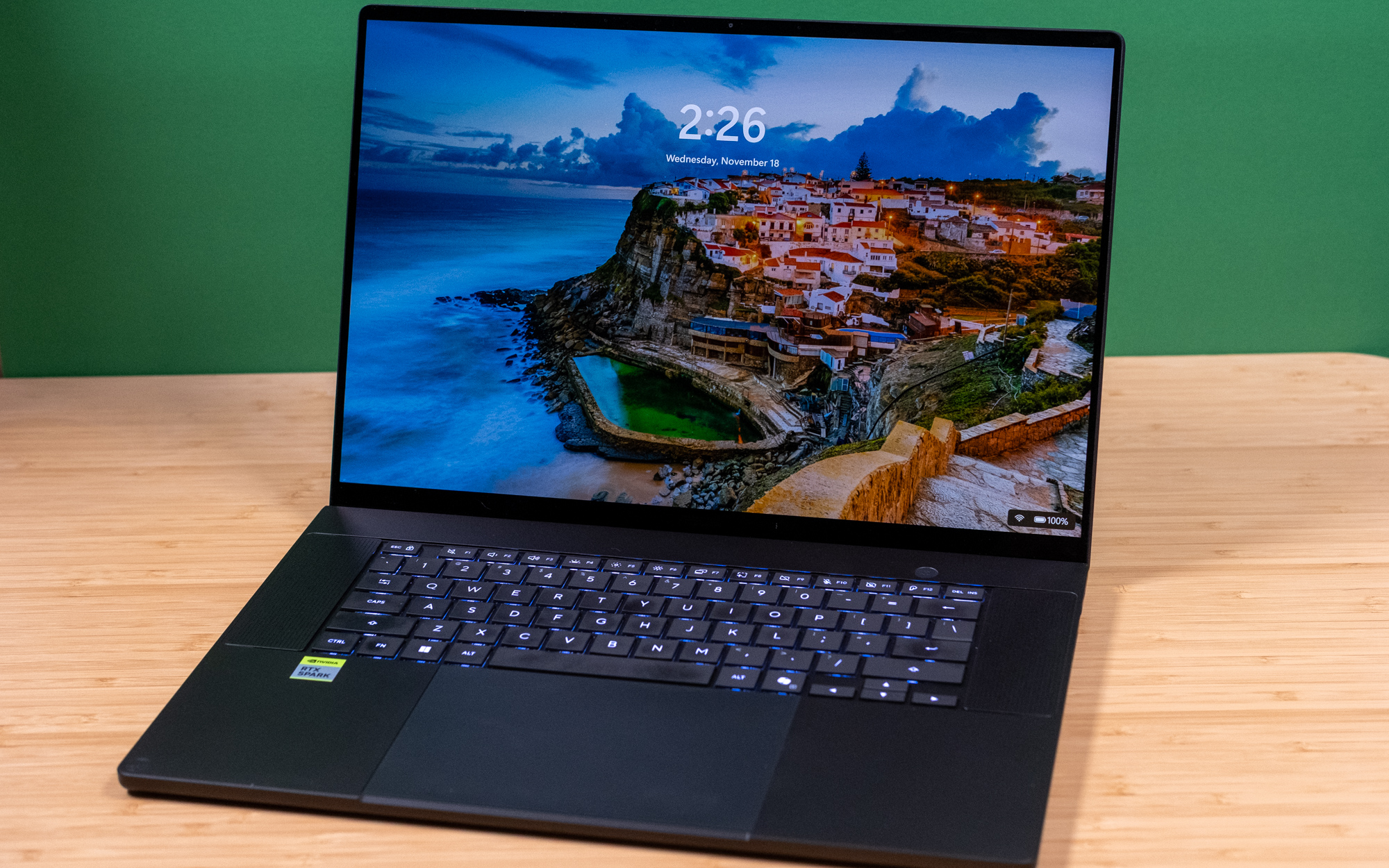
Image: Ars Technica
Physical Design and Display Specifications of the Asus ProArt P16
Visual output is driven by a 16-inch 120Hz OLED display featuring a 4K+ resolution of 3840 x 2400. Stacked tandem pixels allow the panel to achieve a peak brightness of 1,600 nits, though solid colors at lower brightness levels can exhibit minor graininess depending on the specific unit. The aluminum chassis is available in white or black, with the high-end configuration restricted to the black matte finish that tends to attract smudges. An enormous haptic trackpad measuring 150. 3 x 99. 5 mm replaces physical click mechanisms, offering adjustable sensitivity and detection thresholds alongside a tactile, firm keyboard deck.
Connectivity, Battery Life, and Pricing Details
Physical connectivity includes three USB-C ports with USB4 support distributed across both sides of the chassis for easier charging and device connection. Users also gain access to a legacy USB-A 3. 2 Gen 2 port, full HDMI, a 3. 5 mm jack, and an SD card reader. A bundled 140 W USB-C charger restores power quickly, while battery longevity targets up to 12 hours depending on task intensity. Buyers seeking the top-tier hardware configuration featuring 128GB of memory should expect to pay $7,000 for the device.
Image: Ars Technica
Specifications
| Memory configuration | up to 128GB of LPDDR5x RAM |
| Processor | 20-core Grace CPU (10 Arm Cortex-X925 cores, 10 Arm Cortex-A725 cores) |
| GPU | Nvidia GB20B Blackwell GPU |
| Display | 16-inch 120Hz OLED 4K+ resolution (3840 x 2400) |
| Peak brightness | 1,600 nits |
Check The Latest Price
As an Amazon Associate, Tech Updates Daily earns from qualifying purchases made through links on this page, at no extra cost to you. Prices and availability change quickly - the retailer's page shows the final price.
Key Points
- The Asus ProArt P16 features the Nvidia Spark RTX chip and a 20-core Grace CPU.
- The high-end configuration includes 128GB of LPDDR5x RAM and runs Windows 11.
- The 16-inch OLED screen delivers a 4K+ resolution and 1,600 nits of peak brightness.
- The top-end model carries a price tag of $7,000.
Frequently Asked Questions
How much does the top-end Asus ProArt P16 cost?
The top-end ProArt P16 with 128GB of memory costs $7,000.
More Tech Updates
- More Tech Science News news and updates
- Latest AI news
- Android tips and news
- iPhone and iOS updates
- Cybersecurity alerts
- Tech Updates Daily — home
Source: Ars Technica — Read the full original report at the source.
Disclaimer: This is an original article written for information purposes only, based on publicly available reports. All rights to the original report belong to its publisher. If you are a rights holder and want any content reviewed/removed, please see our DMCA / Copyright page — we act within 24-48 hours.