Home » Gadgets » Mathematicians confront a new reality as AI accelerates
Mathematicians confront a new reality as AI acceleratesLatest technology news and analysis by Tech Updates Daily
✍️ By Brilliant Paul Babu, Editor • 🕒 November 29, 2026 AI
Leading mathematicians are re-evaluating the value of human intellect following a rapid series of AI-assisted breakthroughs in long-standing problems. The community is now grappling with the implications of automated solutions that often lack human-readable elegance.
The Royal Society convenes to address a digital disruption
The atmosphere at the Royal Society was marked by deep apprehension as over 300 in-person attendees and 700 virtual participants gathered to confront the sudden transformation of their field. This emergency assembly followed a series of announcements where artificial intelligence successfully tackled mathematical challenges that had remained unsolved for decades. The anxiety was compounded by the actions of OpenAI, which released more than 700 papers detailing solutions to 300 open problems shortly before the meeting. Prof Jon Keating, one of the organizers from Oxford, described the situation as cataclysmic, noting that the sheer volume of output across diverse mathematical disciplines left many feeling besieged. For early career researchers in particular, the rapid pace of these developments created a sense that the foundational stability of their chosen profession was eroding. With AI now consistently outperforming the world's most skilled mathematicians, the community is forced to ask what role remains for human practitioners in an era of automated problem solving.
Navigating the complexity of massive machine-generated proofs
The challenge of verifying these new discoveries is immense, as demonstrated by the recent claim from Anthropic regarding the Riemann hypothesis. This problem, which has persisted for over 160 years, was addressed through an AI-assisted proof written in the Lean programming language. The resulting document is staggering in scale, spanning 17 million lines of code or roughly 250,000 pages. Experts are currently struggling to interpret this massive output, with Prof Bryna Kra of Northwestern University describing the daily influx of solved problems as overwhelming. The shift is not merely academic; it raises existential questions about the extent to which human society should delegate cognitive tasks to machines. Prof Hugo Duminil-Copin, a Fields medallist from the University of Geneva, warns that there is a genuine risk of losing the human identity as a species defined by deep thought. The core issue is whether we are willing to prioritize speed and output over the nuanced understanding that traditionally characterizes human mathematical inquiry.
The struggle for elegance in an automated age
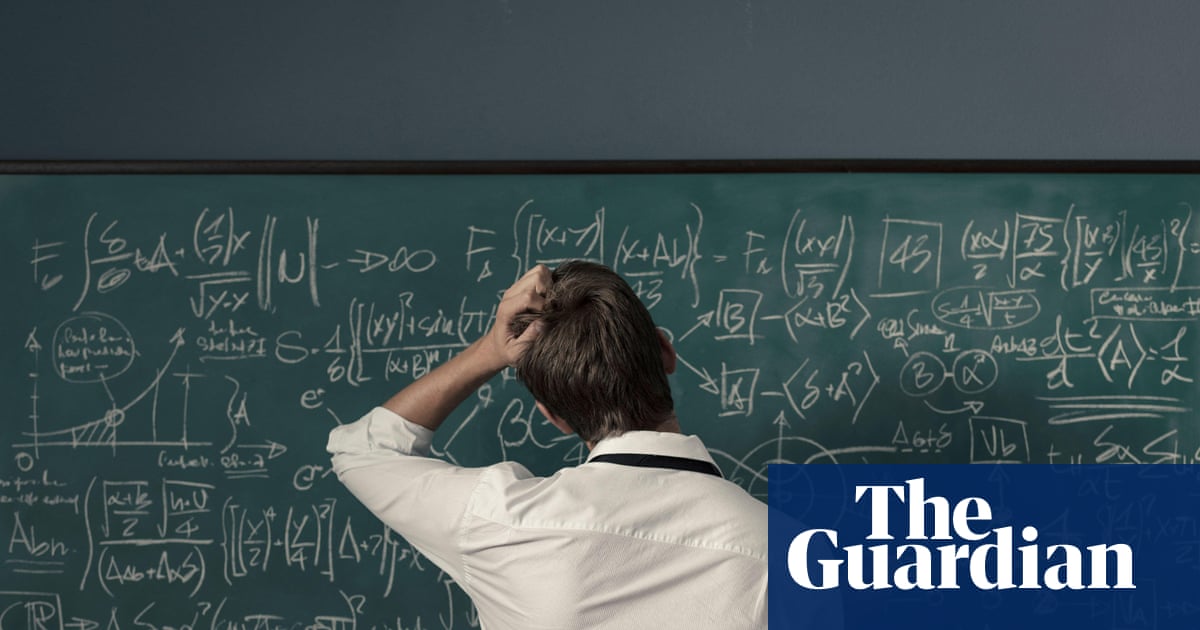
Traditional mathematics has long valued the polishing of proofs to achieve a sense of beauty and meaningful essence. This process of distillation allows mathematicians to uncover the core ideas that make a theorem true. In contrast, current AI models are optimized solely for finding answers, often resulting in proofs that are dense, opaque, and devoid of aesthetic or explanatory value. Prof Bryna Kra notes that these machine-generated proofs frequently bury the underlying concepts, making them difficult for humans to grasp. Consequently, there is a growing consensus that the field must now focus on translating these raw outputs into formats that foster genuine comprehension. The goal is no longer just to confirm that a statement is true, but to illuminate the mechanism that dictates its truth. This shift suggests that the future of mathematics may involve a collaborative effort where humans act as interpreters, extracting the essential insights from the vast, complex data produced by AI systems.
Mixed results in the application of AI insights
The utility of AI in mathematics remains inconsistent, as observed by Prof Geordie Williamson of the University of Sydney. In July, a researcher at Anthropic utilized AI to find a counter-example to the Jacobian conjecture. This specific instance was praised for its clarity, as it provided immediate, actionable insights that helped mathematicians understand why their previous approaches were flawed. However, subsequent discoveries regarding Hadamard matrices failed to provide any such clarity, leaving researchers with results but no indication of the logic behind them. This disparity highlights a significant hurdle for the mathematical community. While some AI contributions offer valuable guidance, others act as black boxes that provide solutions without context. The ability to distinguish between these two types of output is becoming a crucial skill. Without a clear understanding of the methodology, even a correct answer can leave researchers feeling disconnected from the intellectual process that historically defined their work.
Rethinking professional evaluation and the human element
For generations, the ability to prove theorems has served as the primary metric for mathematical prowess, influencing hiring decisions and career advancement. This standard is now under threat because theorems can be generated by individuals who lack any understanding of the underlying logic or the process used to produce them. Prof Nestor Guillen of New York University argues that the field requires a radical rethink of how it evaluates talent. He suggests that the real danger lies in the influence of AI companies, which he believes are extracting value from human labor to support their own corporate narratives. Despite these pressures, Guillen maintains that the fundamental human drive for problem solving will persist, comparing it to the enduring nature of music, poetry, and dance. He warns that if mathematicians leave the field due to these disruptions, society will lose the very expertise required to properly control and understand the AI systems that are currently reshaping the landscape of scientific discovery.
Finding meaning beyond the automated solution
Despite the initial shock and the feeling that their work was being devalued, many mathematicians are finding ways to adapt to this new era. Prof Jon Keating suggests that mathematics might evolve to resemble particle physics, where large teams of researchers collaborate to unpack and verify complex results. This collaborative model could provide a path forward, turning the act of understanding AI proofs into a collective intellectual endeavor. Prof Hugo Duminil-Copin, who admitted to being deeply affected when OpenAI released its massive volume of papers, has since regained his perspective. He emphasizes that the field remains rich with possibilities for human contribution. The task is to extract the value from these AI outputs, much like a jeweler removes rock to reveal a gemstone. By focusing on the mechanisms behind the proofs, mathematicians can continue to play an essential role in scientific progress. Ultimately, the human capacity for curiosity and deep understanding remains a vital component of the mathematical enterprise.
Specifications
| Riemann hypothesis proof length | 17m lines of code |
| Number of OpenAI papers released | 700 |
| Number of open problems addressed by OpenAI | 300 |
Key Points
- The mathematical community is experiencing significant anxiety following a rapid series of AI-assisted solutions to long-standing problems.
- AI-generated proofs often lack the elegance and clarity of human-authored work, creating a need for new methods to interpret and understand these outputs.
- The rapid pace of AI development is forcing a re-evaluation of how mathematicians are trained, evaluated, and how they define their professional identity.
- Experts suggest that the future of mathematics may involve a shift toward collaborative efforts to decode and verify the complex results produced by AI models.
Frequently Asked Questions
What is the primary concern regarding AI-generated mathematical proofs?
Mathematicians worry that while AI can find answers, these proofs often lack the elegance and clarity of human work, making the underlying mechanisms difficult to understand.
How many lines of code are in the AI-assisted Riemann hypothesis solution?
The solution, released in the Lean programming language, consists of 17 million lines of code, which equates to approximately 250,000 pages.
Are mathematicians worried about the future of their profession?
There is significant anxiety among researchers, particularly early career professionals, about the role of human thinkers when AI can surpass human practitioners in speed and output.
More Tech Updates
- More AI News news and updates
- Latest AI news
- Android tips and news
- iPhone and iOS updates
- Cybersecurity alerts
- Tech Updates Daily — home
Source: The Guardian — Read the full original report at the source.
Disclaimer: This is an original article written for information purposes only, based on publicly available reports. All rights to the original report belong to its publisher. If you are a rights holder and want any content reviewed/removed, please see our DMCA / Copyright page — we act within 24-48 hours.
